
Operators care for the machines. You see faults instantly.
TPM programmes usually fizzle out after six months because they run on paper and enthusiasm. Here, autonomous maintenance has a kiosk at the machine, rounds have a schedule and provable completion, and every report from the floor has a measured response. So the effect shows up in the numbers, not just on a noticeboard.
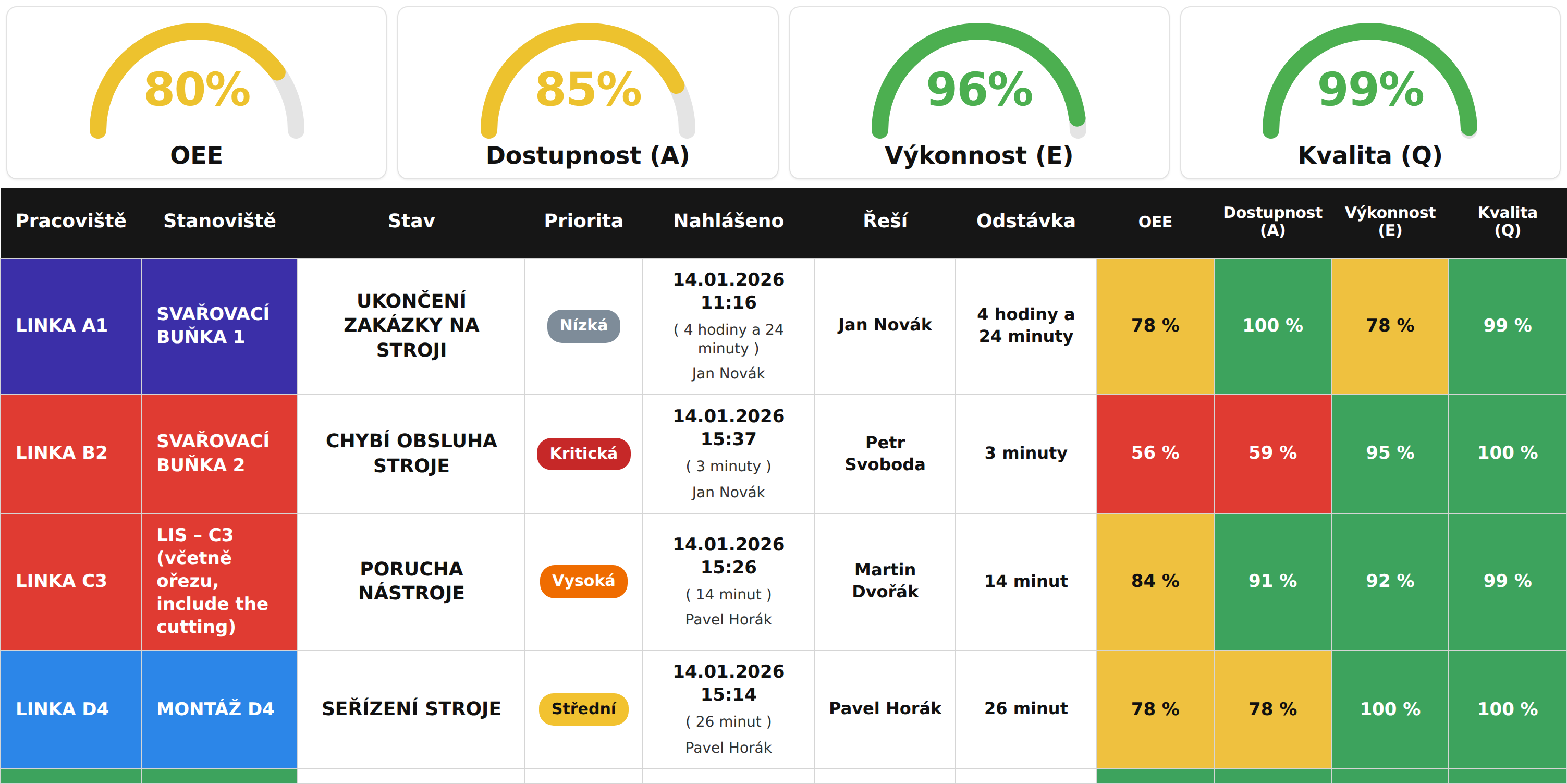
Kiosk at the machine with big buttons · report escalation matrix · mobile push notifications · Analytics
TPM on a noticeboard interests no one
Start-of-shift tasks get ticked off on paper nobody reads. Whether machines were actually cleaned and checked cannot be proven.
From operator to foreman, from foreman to maintenance. By the time a fault reaches the right person, the machine has been down for tens of minutes.
Equipment effectiveness is calculated once a month in Excel. Meetings discuss the past, not today's shift.
iDomino TPM turns operators into the first line of machine care: tasks with confirmation and history, faults reported in real time and OEE with no manual number-crunching.
Not new screens. A different way of working.
The programme outlives the early enthusiasm
Tasks have a schedule, ownership and provable completion. Keeping it running no longer rests on a single dedicated coordinator.
Minor issues don't turn into downtime
The operator reports them right at the machine, and it is visible whether anything was done about them.
Paper leaves the shop floor
Checklists and reports are created at the kiosk. Nobody retypes forms into spreadsheets in the evening.
Management sees the return
OEE, MTBF and MTTR before and after rollout give the programme a measurable result.
The numbers make no excuses
"Within six months we achieved more than a 15% increase in overall production efficiency. Because we no longer chase delayed orders, the team is calmer and in better spirits."
Figures are based on iDomino case studies and internal data from manufacturing projects, 2020 to 2026.
From one button press to the right technician
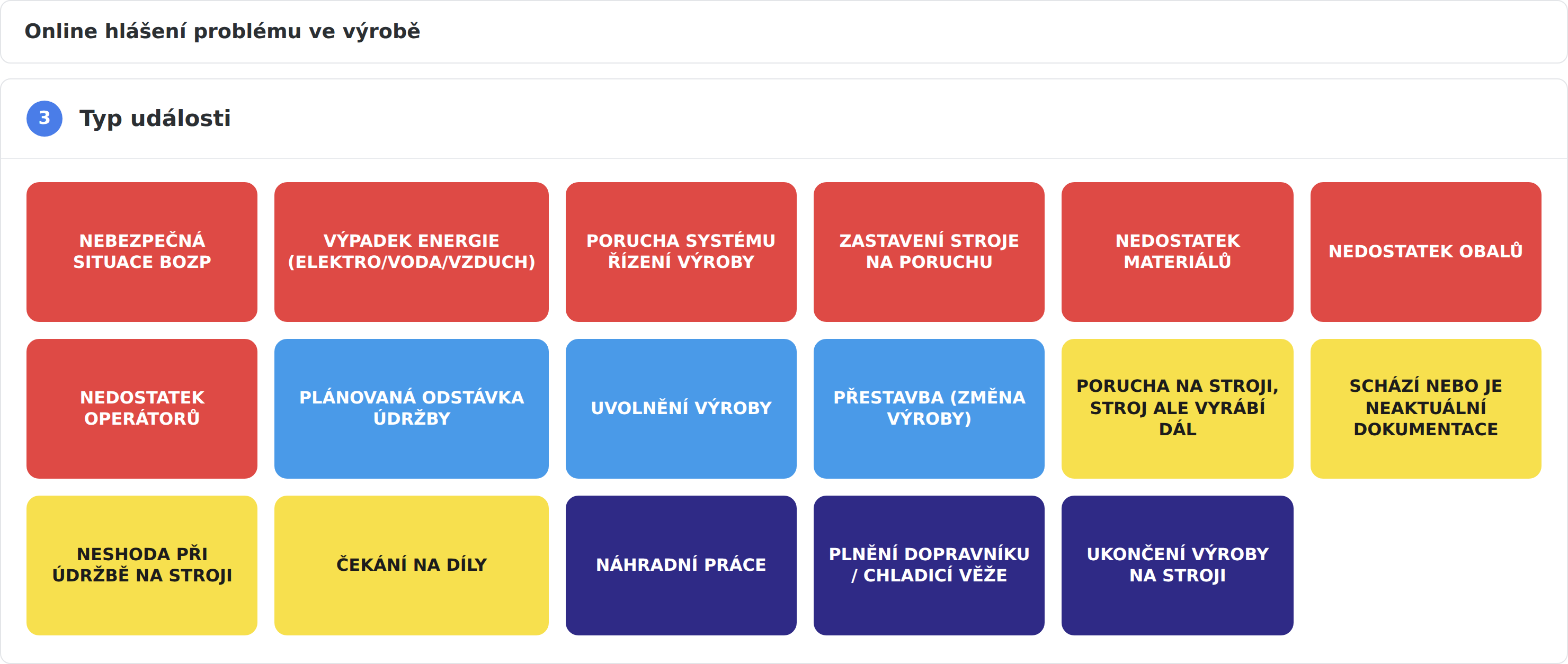
The report is created at the machine: on the kiosk or on a phone, with the event type, a description and a link to the workplace. No phoning around the shop floor.
The escalation matrix controls who hears about the fault: the report template has escalation teams, the event type drives the options and the operator chooses "I'll handle it" or "Escalate to team". The specific responders get notified.
A closed report with a repair description becomes the data source for Analytics and for the AI analysis of recurring problems, which finds repeat faults on its own.
What TPM brings to production, maintenance and management
Operators look after their own machine
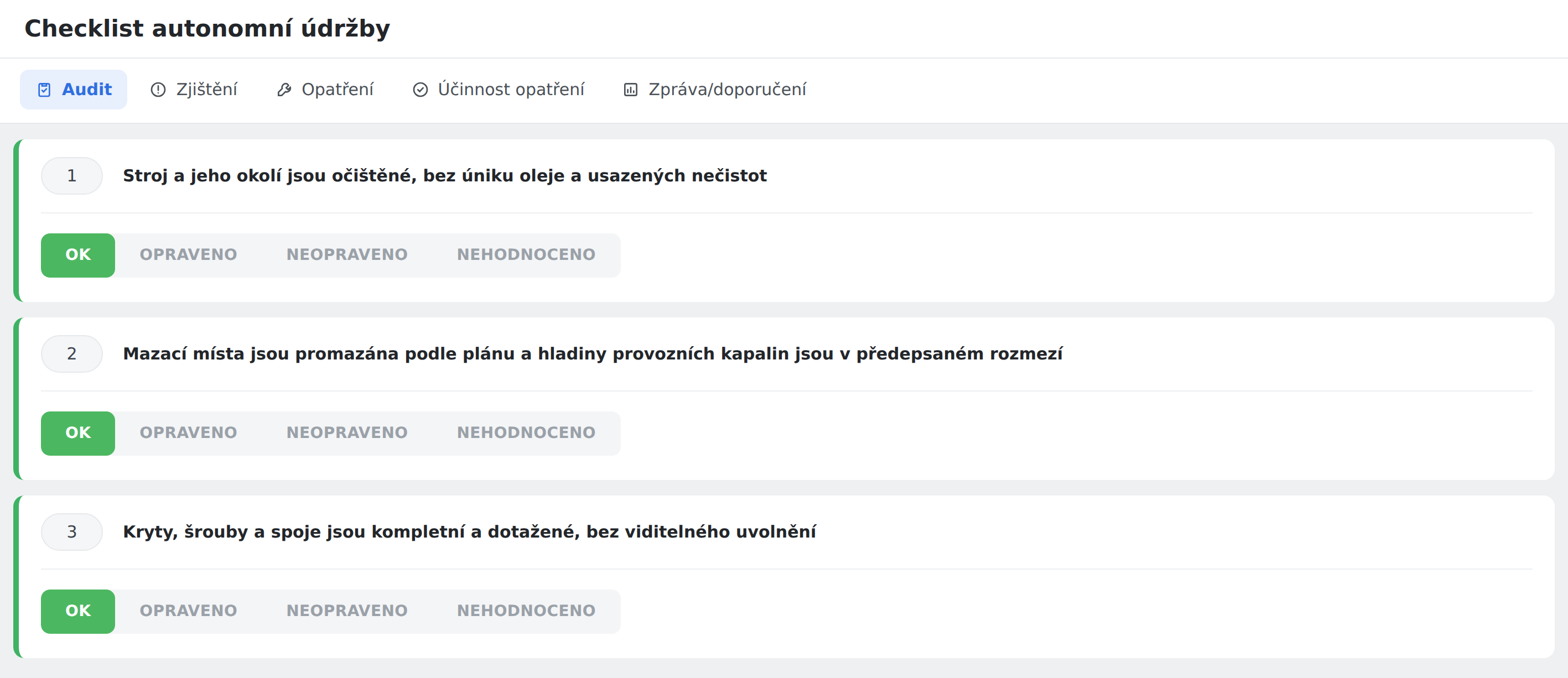
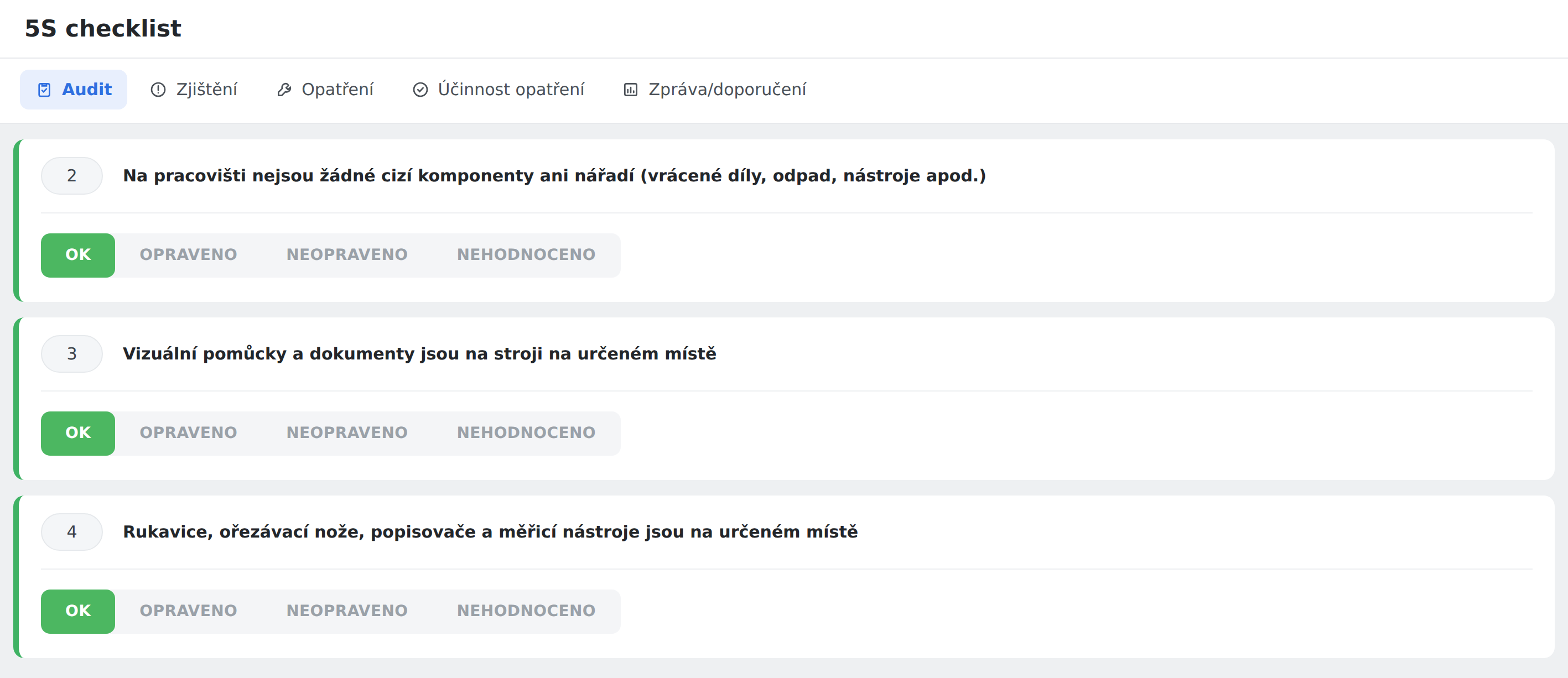
Daily autonomous-maintenance tasks sit right at the line, with confirmation and history. Minor issues get fixed before they grow into downtime.
Recorded at the machine, not on paper
A touch kiosk with big buttons takes the operator two taps. No more retyping paper checklists nobody read anyway.
Routine care happens - and it is provable
Checklists tied to workplace, shift type and station launch directly in the open shift and are logged as audit tasks. The Completed checklists overview even separates checks with a finding from those without, so you can prove completion in a customer audit.
Maintenance hears about a fault instantly
The report leaves the shop floor the moment it arises, with the workplace, event type and downtime length. Response time is measured, so it is clear where the minutes are lost.
The right person to solve it gets the job
The escalation matrix routes the event to the right team by type and workplace, with a push notification to the phone. No more hunting for who is on duty.
You can see what was skipped
Overviews of completed and missed routine maintenance show where checks are missing, and for each person you can see how many checklists they finished. The programme does not rely on someone remembering.
The TPM effect is visible in the numbers
OEE, MTBF and MTTR are calculated from reports and produced output. The improvement team gets a yardstick to justify the time spent on the programme.
The shop floor sees where it stands
Dashboards and trends on large screens keep the topic alive between shifts. The result does not just hang in the quality office.
TPM is not an island
A shop-floor report becomes a request in the maintenance queue, closed records feed analytics and recurring problems go into the action plan. Data is entered once.
Operators report. Maintenance runs the work.
TPM and CMMS are two sides of the same coin: TPM brings production into machine care, CMMS runs the work of the maintenance department. In iDomino they hand off to each other with no retyping.
- Report from TPM → request in CMMS: a fault reported by an operator lands in the maintenance queue for triage and scheduling.
- Autonomous vs. specialist maintenance: operators own the daily tasks, technicians own work orders and parts.
- Shared data: downtime from reports feeds OEE, MTBF, MTTR and asset costs.
- One machine, one history: tasks, reports, work orders and inspections on the record of the same asset.
What each role gets out of it
Answers for the lines running
- Autonomous maintenance and checklists tied to workplace and shift
- Shop-floor reports with measured response time
- Line status on screens in the hall, not in email
Takes over what the floor reports
- Reports from TPM feed straight into the maintenance queue
- The escalation matrix routes the event to the right team
- MTBF and MTTR show which machines eat the most hours
Keeps the programme alive
- Overview of completed and missed routine maintenance
- Recurring problems go into the action plan in one click
- Programme impact measurable in OEE, not just workshop attendance
Wants to see the return
- OEE, MTBF and MTTR trends before and after rollout
- Lines, shifts and plants compared against the same target
- The programme does not rest on one enthusiastic coordinator
Frequently asked questions
TPM brings production operators in: autonomous maintenance, checklists, fault reporting and OEE. CMMS runs the maintenance department: work orders, technician capacity, the parts store and inspections. In iDomino they hand off to each other - a report from TPM becomes a request in CMMS.
Yes, that is what it is built for: kiosk mode on a shared terminal at the workplace, big tiles and simple task confirmation. The terminal knows its workplace, so the operator just confirms a check or reports a fault, with no searching.
A configurable escalation matrix decides: every report template has defined escalation teams and the event type determines which of them are offered. A group expands to the specific responders, who receive the alert, and response time is measured.
From three sources created in operation: good and reject parts (OK and NOK) produced per shift, cycle-time standards, and downtime from fault reports. Analytics calculates OEE and its components, MTBF and MTTR from them - with no manual retyping into Excel.
Yes. Closed reports with a repair description feed the AI analysis of recurring problems, which finds repeat faults on its own, names them and quantifies the time lost.
Yes, the modules are licensed separately. Many companies start with TPM (reporting, checklists, OEE) and add CMMS with work orders, the parts store and inspections as a second step.
We will build TPM on one of your lines
Book a no-obligation online demo. We will set up autonomous maintenance and checklists for one workplace, report a fault from the kiosk and walk it through the escalation matrix all the way to analytics.